Agricultural Drone Spraying
Before the Drone Ever Takes Off
Most farmers who call us have a specific problem already in mind, weeds crowding out a hayfield, a pest pressure building in a row crop, a disease starting to show up in a wet season. The first step isn’t flying, it’s talking. We walk through what’s going on, what’s been tried before, and what timeline matters, because a treatment that would work fine in three weeks doesn’t help if the problem is spreading now.
From there we look at the field itself, either in person or through satellite imagery combined with what you tell us about the terrain. Acreage, field shape, obstacles like tree lines or power lines, and access points all factor into the flight plan. A field with a pond in one corner or an irregular boundary against a wooded edge needs a different flight path than a clean, open rectangle, and we map that out before the day of service rather than improvising it in the field.
Building the Treatment Plan
Once we understand the problem and the field layout, we work out the specific treatment: what product, at what rate, applied how. This is where we lean on the working relationship between drone operation and agricultural chemistry, we’re not guessing at dosages. For herbicide, fungicide, insecticide, or fertilizer applications, we coordinate rates and timing with the goal of treating the actual problem on your field, not applying a generic blanket rate that might be wrong for your specific crop stage or weed pressure.
Timing matters as much as the product itself. Herbicides applied too early or late in a weed’s growth cycle lose effectiveness. Fungicides need to go down ahead of disease pressure, not after it’s already visible. We build the spray date around what the crop and the problem actually call for, weather permitting.
The Day of Service
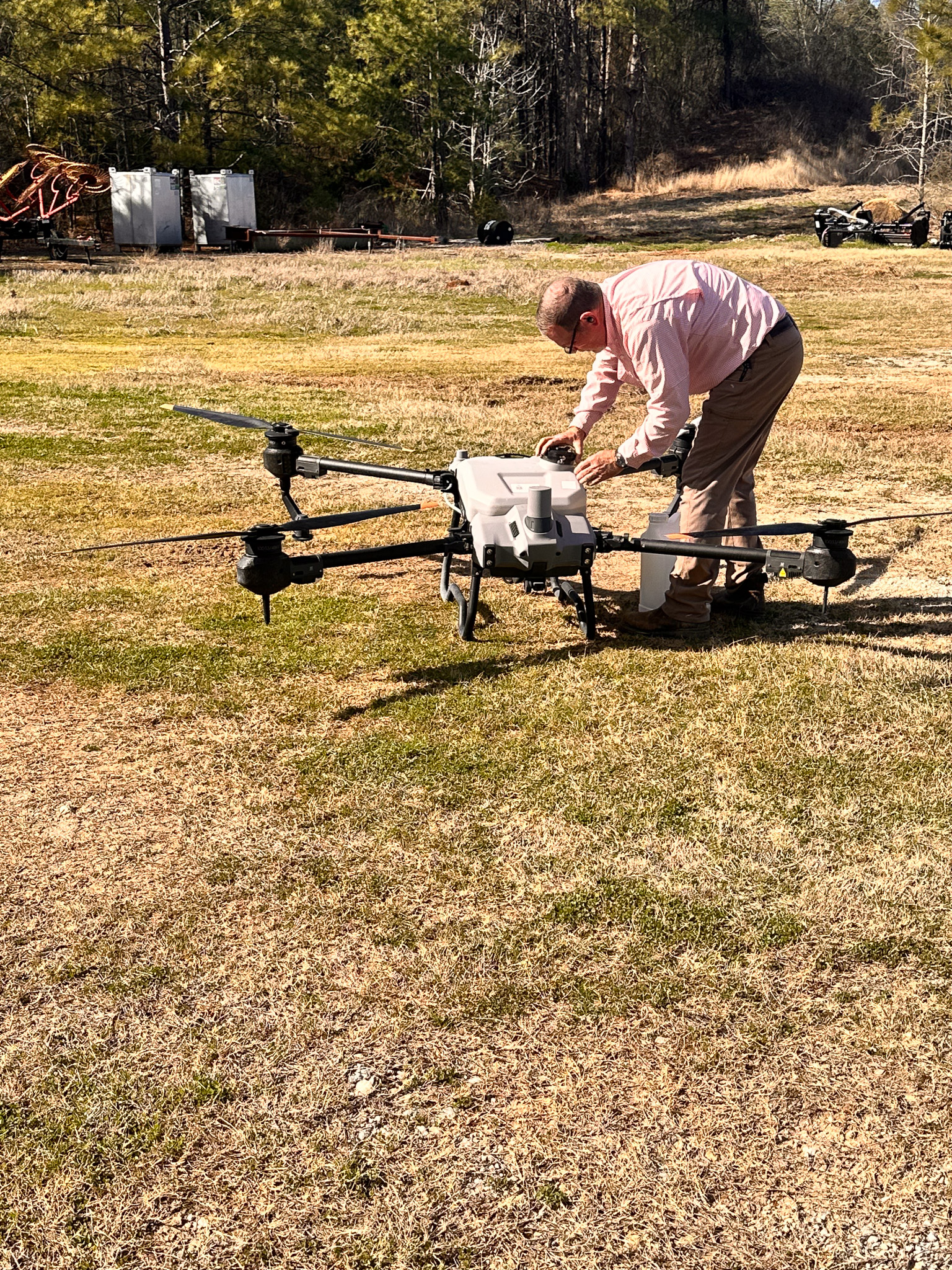
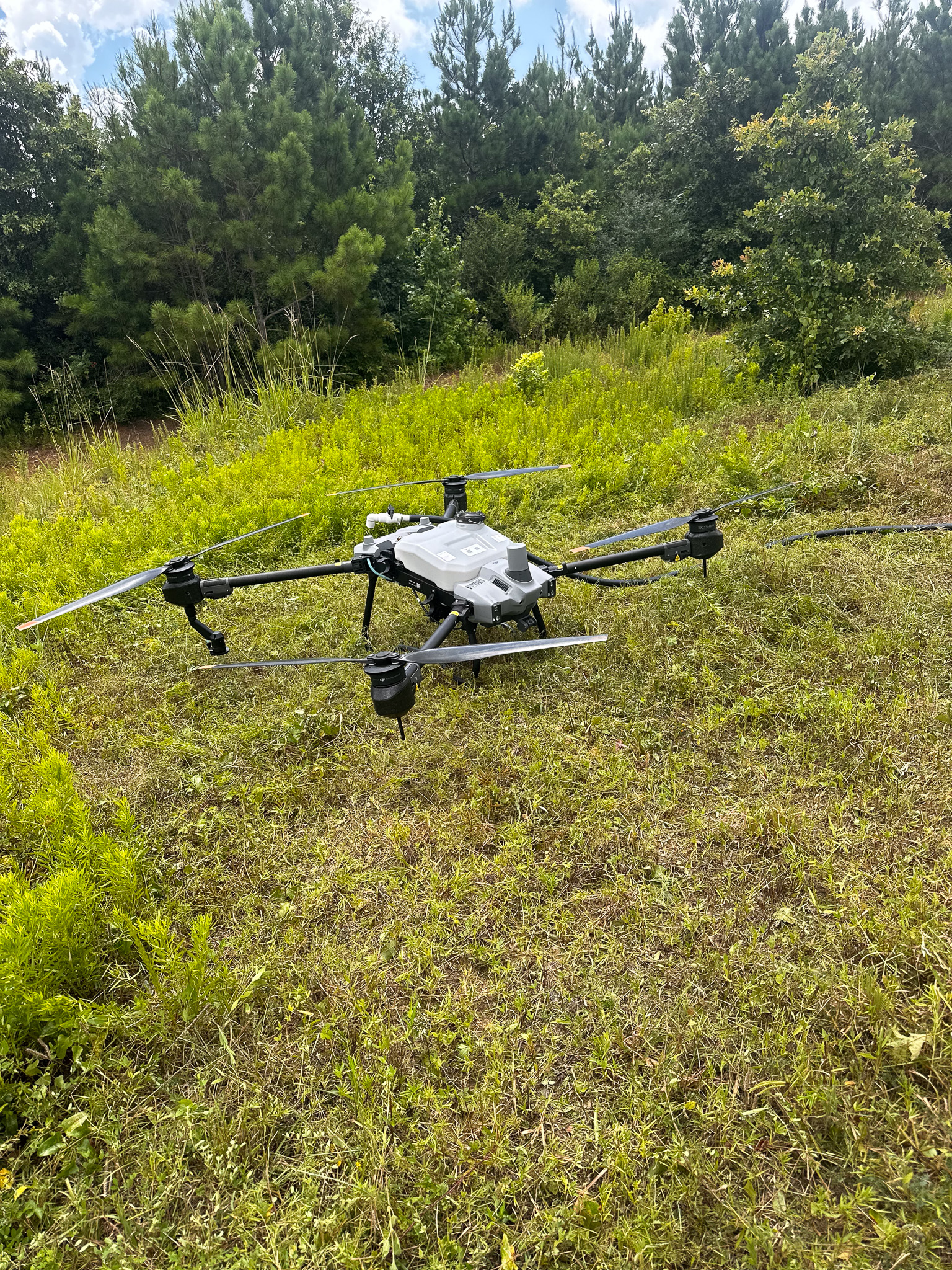
On the day itself, our crew arrives with the aircraft matched to your field, either the T20P for tighter or irregular acreage or the T40 for broader open ground, and flies the pre-mapped route. Because the drone operates above the field rather than driving through it, there’s no tire tracks through your crop, no compacted soil, and no waiting for the ground to dry out enough to bring equipment in. That’s often the deciding factor for farmers who’ve had a treatment delayed for days by wet fields with traditional ground rigs.
Flights are flown at low altitude with controlled droplet size and flow rate, which keeps the application consistent from the center of the field to the edges. We monitor coverage as we go and adjust for wind conditions, since drift control matters both for treatment effectiveness and for keeping product off neighboring land or waterways.
After the Spray
Once treatment is complete, we’re available to answer questions about what to expect, how soon results should show, and whether a follow-up application makes sense. Some treatments, particularly fungicide programs during a wet growing season, aren’t a one-and-done job, and we’ll tell you upfront if your situation is likely to need a second pass rather than letting that be a surprise.
We also keep a record of what was applied, at what rate, and when, which matters if you’re tracking input costs across the season or need documentation for crop insurance or lease requirements.
Why This Process Matters More Than the Drone Itself
A lot of the conversation around agricultural drones focuses on the aircraft, but the equipment is only half the equation. The other half is whether the operator actually understands crop treatment, timing, and field conditions well enough to put that equipment to good use. We built our process around getting the assessment and timing right first, then bringing in the aircraft that fits, rather than treating every job as an identical flight with a different chemical loaded in the tank.
If you’re deciding between us and another provider, the question worth asking isn’t just what drone they fly, it’s whether they can walk you through why they’re recommending a specific product, rate, and timing for your field.
What We Cover
This process applies across row crops, hayfields, and pastureland throughout East Texas, for herbicide, fungicide, insecticide, and fertilizer applications. If you want detail on the specific aircraft and flight technology behind this process, see Agricultural Aerial Services. If you manage a working farm and want a single point of contact for spraying across a full season rather than booking each visit individually, Farm Spraying Services is built around that relationship.
Serving East Texas Farms with Local Experience
Doss Drone Services is based in East Texas and understands the specific challenges that local farmers face. Weather conditions, soil types, and seasonal growth patterns all influence how agricultural treatments should be applied.
Our agricultural drone spraying services are available within a two-hour radius of Palestine and Longview, providing reliable support for farms throughout the region. Whether managing row crops, hayfields, or pastureland, our team works closely with farmers to develop effective spraying plans.
Local knowledge allows us to provide practical solutions that align with real-world agricultural conditions in East Texas.
Schedule a Field Assessment
If you’ve got a field problem you’re trying to time correctly, weeds getting ahead of a hayfield, disease pressure building in a wet season, or just a season’s worth of treatments to plan out, let’s talk through it before the window closes.
Contact us to schedule an assessment, view recent work in our Gallery, or check our Service Area to confirm we cover your property.