Agricultural Aerial Services
Two Drones, Built for Different Jobs
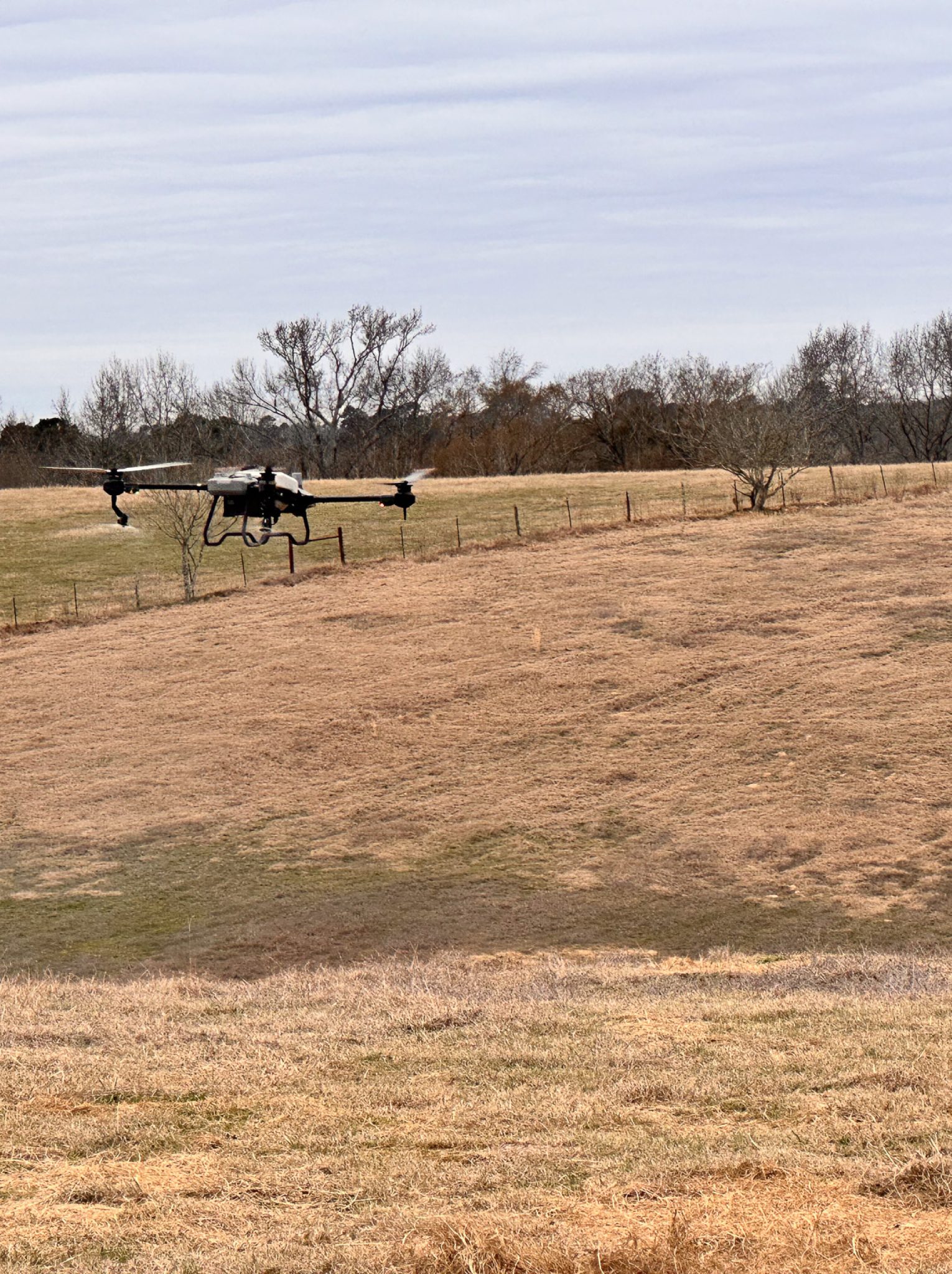
Doss Drone Services runs two primary aircraft for agricultural work: the DJI T20P and the DJI T40. They’re not interchangeable, and which one shows up on your property depends on the size and shape of the job.
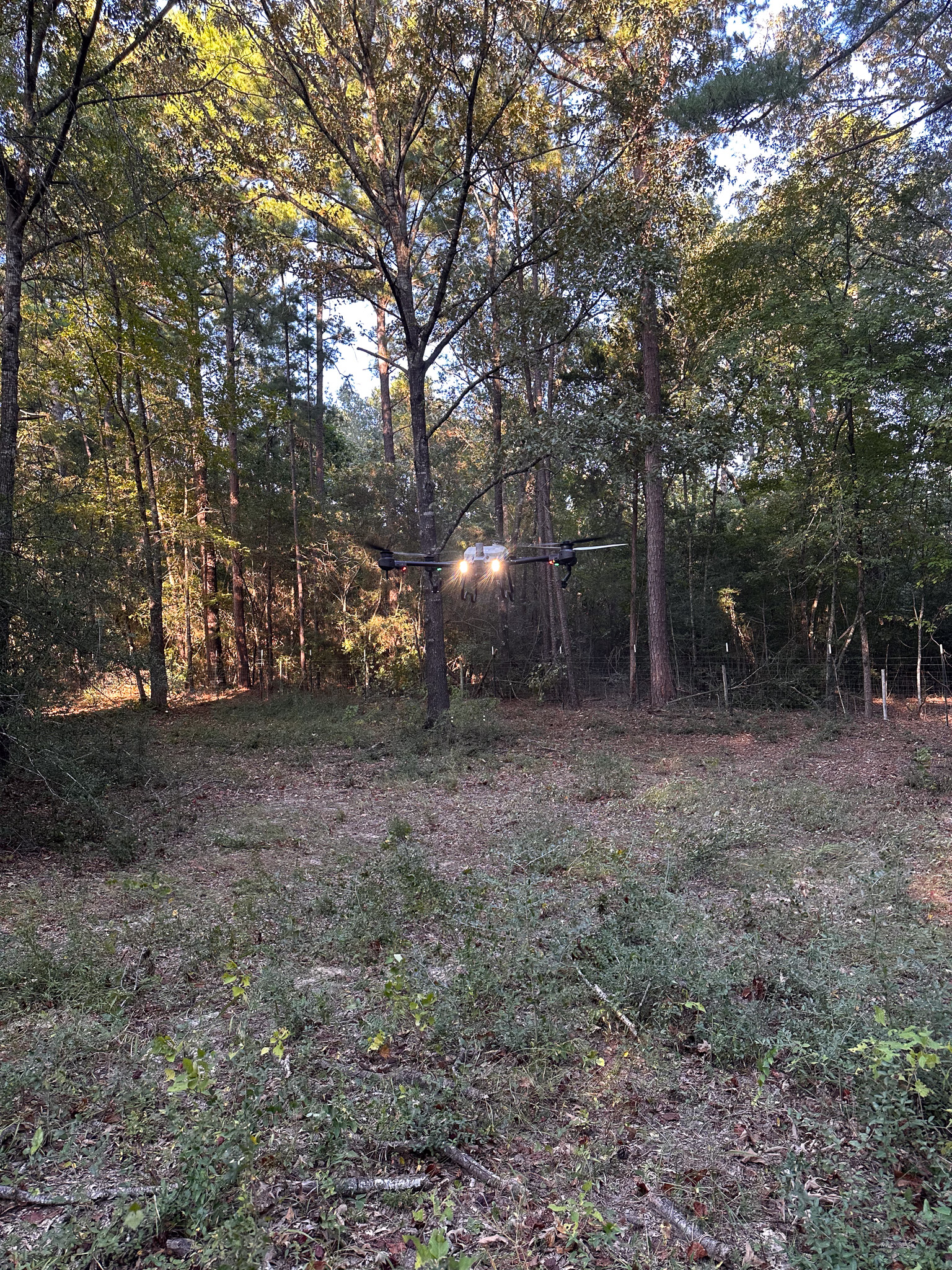
The T20P is our go-to for smaller, tighter, or irregularly shaped parcels, think residential-adjacent acreage, narrow fields boxed in by tree lines, or properties where a larger aircraft would waste time turning around at the end of every pass. It’s maneuverable enough to work close to obstacles without sacrificing spray accuracy.
The T40 is built for scale. When we’re covering broad acreage, whether that’s a large hayfield or a multi-field row crop operation, the T40’s larger tank and wider swath let our crews cover more ground per flight, which matters when a treatment window is measured in days, not weeks. We currently operate three fully equipped spray crews, which lets us run T20P and T40 units in parallel across multiple properties rather than making a single farm wait its turn behind another job.
GPS-Guided Flight: Why Accuracy Matters More Than Speed
Every agricultural flight we run uses GPS-guided navigation, which means the drone follows a pre-mapped flight path rather than relying on a pilot eyeballing the field from the ground. That matters for two reasons.
First, it prevents the gaps and overlaps that come from manual flight control. A missed strip means untreated weeds or pests; a doubled-up strip means wasted chemical and, in some cases, crop stress from oversaturation. GPS mapping keeps the spray pattern consistent across the entire field, including the corners and edges where hand-flown drones tend to drift.
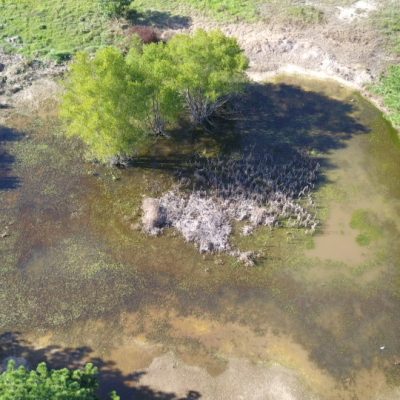
Second, it lets us map irregular field boundaries before the first flight. East Texas fields rarely come in clean rectangles, there’s a pond in one corner, a stand of trees along the fence line, a low spot that floods after rain. We build the flight plan around those features ahead of time so the drone treats exactly the area intended and nothing more.
Controlled Spray Systems
The spray systems on both aircraft allow our operators to adjust droplet size and flow rate based on the treatment being applied. A herbicide application on established grass calls for a different droplet profile than a fungicide treatment on a row crop canopy, and the ability to dial that in per job, rather than running one fixed setting regardless of the product, is a big part of why our applications hold up against ground equipment on accuracy.
Payload capacity also factors into planning. Larger tanks on the T40 mean fewer refill trips on big acreage, which keeps a large job moving without long gaps between passes. On smaller properties, the T20P’s lighter footprint means less time repositioning and more time actually spraying.
Licensing, Insurance, and Operating Standards
Every operator flying for Doss Drone Services holds FAA Part 107 certification, and every flight plan follows applicable airspace and agricultural application regulations. We carry insurance appropriate to commercial aerial application work, and we document flight paths and coverage for every job so there’s a clear record of what was treated and when.
This isn’t a hobbyist operation running consumer drones with an aftermarket sprayer bolted on. The equipment, the licensing, and the flight planning are built specifically for commercial agricultural application, which is the standard we think East Texas farmers and landowners should expect before hiring anyone to spray their land from the air.
Matching Equipment to Your Property
Before any flight, we walk through the property, or review it via satellite imagery and conversation, to determine which aircraft and flight plan fits the job. Acreage, field shape, obstacles like power lines or tree cover, and the specific treatment being applied all factor into that decision. A ten-acre hayfield with a pond in the corner gets a different equipment and flight plan than an eighty-acre row crop operation with clean field edges, even if both are technically “agricultural spraying.”
If you want to understand what actually happens during a spray visit, from the initial site assessment through post-treatment follow-up, our Agricultural Drone Spraying page covers that process in detail. If you manage a working farm and need a point of contact for recurring service across a full season, see Farm Spraying Services.
Ready to Talk Equipment and Coverage?
If you want to know which aircraft fits your property or how our GPS-guided flight planning would handle your specific field layout, reach out and we’ll walk through it.
Contact Doss Drone Services to discuss your property, browse the Gallery to see our T20P and T40 in action, or check our Service Area to confirm coverage near you.